The Art of Traditional Attar-Making
19 August 2026
Long before the word "perfume" existed, there was attar — fragrance drawn out of flowers, wood, and resin using nothing but water, fire, and time. It is one of the oldest ways of making scent in the world, and it has barely changed in the centuries since, because the process itself has never needed improving.
Deg-Bhapka: Distillation Without Machinery
Traditional attar-making uses a method called deg-bhapka — a copper still (the deg) connected by a bamboo pipe to a receiving vessel (the bhapka) that sits in a cooling water trough. Flowers, roots, or resin are packed into the deg with water and set over an open wood or dung fire. As the water heats, the steam carries the plant's aromatic compounds up through the pipe and into the bhapka, where it cools and condenses directly into a base of pure sandalwood oil.
There are no thermometers, no pressure gauges, no digital controls. A master distiller reads the process by touch, by smell, and by the sound of the water — knowledge passed down through a family rather than written in a manual.
Why Sandalwood Matters as Much as the Flower
Unlike alcohol-based perfumery, where a fragrance is built by blending isolated notes, attar is captured directly into a sandalwood base during distillation itself. The sandalwood does more than dilute — it absorbs and holds the volatile aromatic molecules, rounding out sharp top notes and giving the finished oil the soft, skin-warm depth attars are known for. This is also why a genuine attar smells different from a synthetic "floral oil": the base isn't added afterward, it's part of how the scent was made in the first place.
A Craft Measured in Generations, Not Batches
A single batch can take anywhere from several hours to several days of continuous, attended distillation, and the yield is small — it can take tens of thousands of hand-picked flowers to fill a single small bottle. Families who practise this craft typically learn it as children, standing beside a father or grandfather at the same deg their own grandfather once tended. That inherited instinct for exactly when a distillation is "ready" is not something that scales, which is precisely why it has stayed a craft rather than becoming an industry.
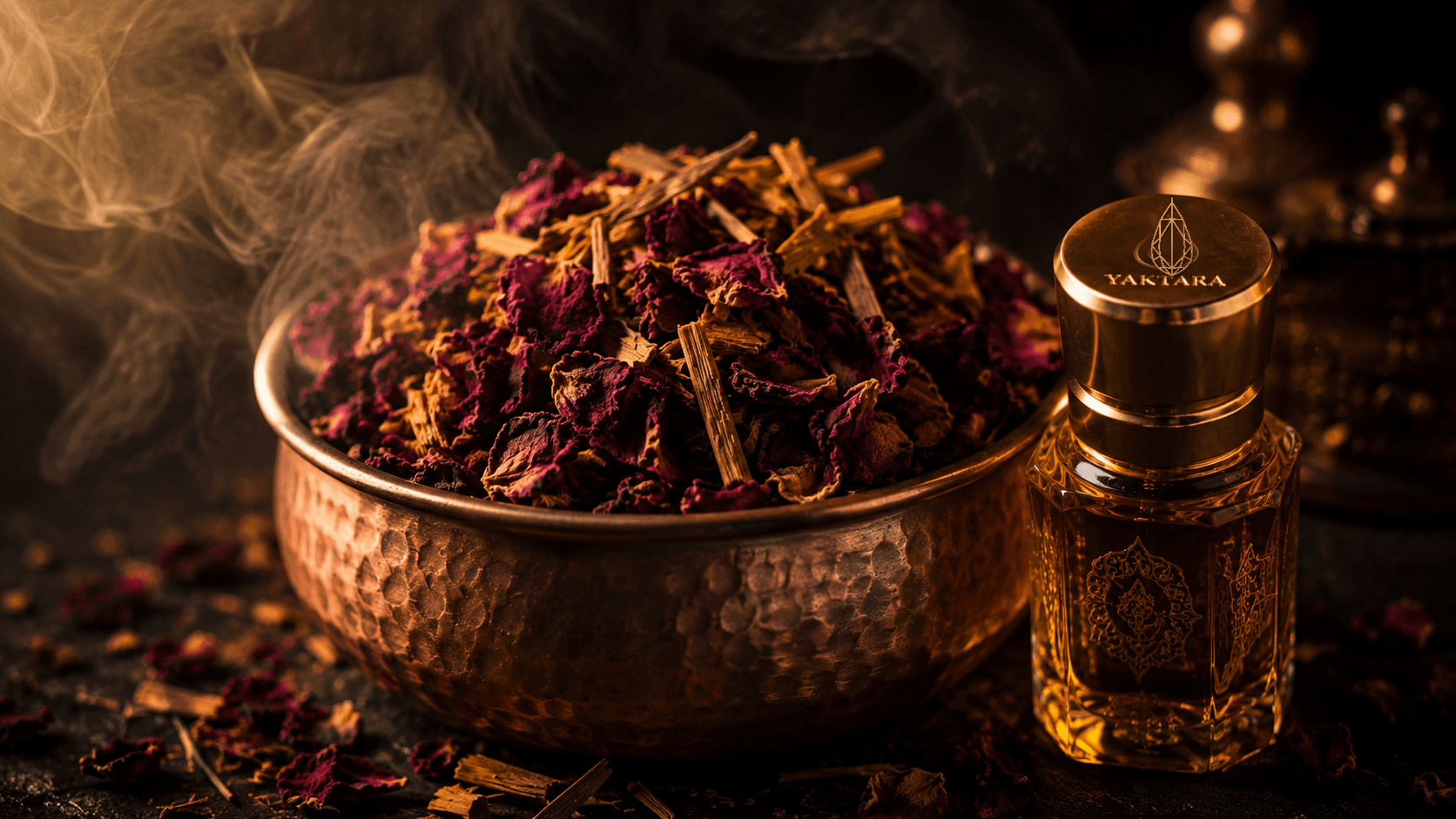
This is the tradition Yaktara draws its attars from — sourced through a family with more than 175 years in the fragrance trade, using the same deg-bhapka method their ancestors did. When you wear a Yaktara attar, you're wearing a process that predates modern perfumery by centuries, made by hands that learned it the same way it has always been taught.